
Fairphone 4 Refurbished Deals - September 2026
Compare 1 refurbished SIM-free offer for the Fairphone 4 from UK retailers.
Buy the Fairphone 4 refurbished SIM-free from £417.00 at Back Market.

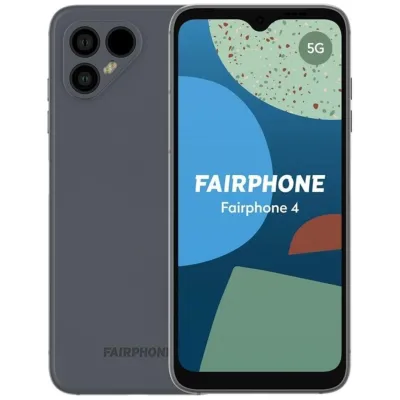
Find the best Refurbished deal on the Fairphone 4 from 1 options.
Deals
SIM Free from £417.00
Color
All
Grey
Storage
All
128GB
Buyers who care about ethical sourcing and long-term repairability and are happy to trade flagship-level performance for a phone designed to be fixed rather than replaced.
Cashback:
£0.00
Upfront Cost:
£417.00
Compare 1 refurbished SIM-free offer for the Fairphone 4 from UK retailers.
Buy the Fairphone 4 refurbished SIM-free from £417.00 at Back Market.
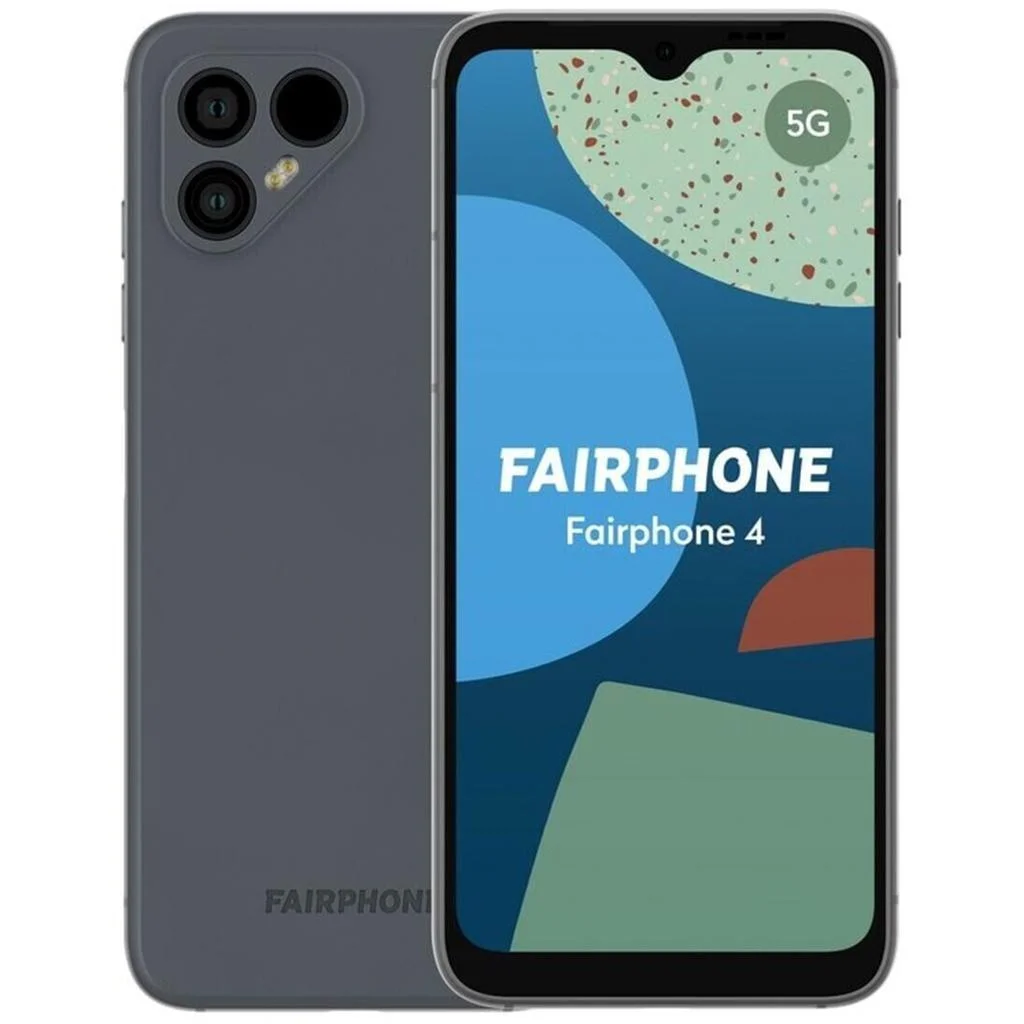
The Fairphone 4 is built around a different promise to most mid-range Android phones: rather than chasing the fastest chip or slimmest body, it prioritises repairability and ethical sourcing, backed by a genuinely modular design. Every major component, including the battery, screen, and both rear cameras, can be swapped out with a simple screwdriver using officially sold spare parts, which means a cracked screen or worn-out battery does not have to mean buying a new phone. The Snapdragon 750G chipset was mid-range even at launch and shows its age now, but it is still perfectly capable for calls, messaging, browsing, and everyday apps. The dual 48MP camera system takes solid daylight photos, though it falls behind dedicated camera phones in low light. Fairphone's standout commitment is long-term software support: the phone has now received Android 15, well beyond what most manufacturers promise for a 2021 device, alongside recycled materials, Fairtrade gold, and ethically sourced cobalt and lithium in its construction. It is not a phone for anyone chasing performance benchmarks, but for buyers who care where their electronics come from and want a device designed to last, it remains a compelling, if ageing, choice.
Tracking the best prices since 1 Jun 2026.
| Feature | Fairphone 4 | Fairphone 5 |
|---|---|---|
| Display | 6.3-inch IPS LCD, 1080×2340 pixels | 6.46-inch OLED, 90Hz, 1224×2700 pixels |
| Battery | 3,905 mAh, removable, 20W charging | 4,200 mAh, user-replaceable |
| Weight | 225 g | 212 g |
| Dimensions | 162 × 75.5 × 10.5 mm | 161.6 × 75.83 × 9.6 mm |
| Storage options | 128GB/6GB RAM, 256GB/8GB RAM | 128GB/6GB RAM, 256GB/8GB RAM |
| Chipset | Qualcomm Snapdragon 750G 5G | Qualcomm QCM6490 |
| Rear camera | Dual 48MP (wide + ultrawide) | 50MP + 50MP (wide + ultrawide) |
| SIM-free price | From £417.00 | Not available |
£200-£399 Phones · 196 phones
Based on calibrated CPU benchmark rankings (60%) and GFXBench GPU scores (40%). Apple chipsets included via editorial calibration since AnTuTu under-represents Apple's architecture.
Based on panel type (LTPO is the modern flagship gold standard), resolution, refresh rate, peak brightness, screen size, and HDR10+ / Dolby Vision support. Marketing peak-brightness claims are capped at 3500 nits to prevent inflation.
Lab-measured by DXOMARK (69 on their scale). The measured result replaces our spec-sheet estimate for this category.
Based on main-sensor size (1-inch / 1/1.3" beats 1/2.0"), telephoto reach (periscope > 5x > 3x optical), image processing tier (Apple Pro, Pixel Pro, Galaxy Ultra, Honor Magic Pro, Xiaomi Ultra), pro video features (ProRes, Apple Log, Dolby Vision), camera-partnership branding (Leica, Hasselblad, Zeiss) and OIS. Older flagships are de-rated since image processing pipelines have advanced significantly each generation. Megapixel count is deliberately downweighted — it correlates poorly with real-world camera quality. Where DXOMARK has lab-tested the phone, its measured score replaces this estimate.
Based on the image-processing tier (Apple Pro, Pixel Pro, Galaxy Ultra and Honor Magic lead on computational processing), sensor resolution in tiers rather than raw megapixels, autofocus, aperture and max selfie-video resolution. Calibrated against DXOMARK's selfie protocol.
Based on battery capacity (mAh) adjusted for platform efficiency calibrated against NotebookCheck, Tom's Guide, GSMArena and CNET reviewer tests. Apple A-series gets +45% (iOS process freezing + LTPO 1Hz + tuned panels make iPhone Pro Max outlast many 6500+ mAh Android phones in measured tests). Top Snapdragon / Dimensity flagships get +15%, budget chipsets are penalised −15% to −25% to reflect less efficient displays and looser background limits. Charging speed is excluded — see the separate Fast charging tag for that.
162 x 75.5 x 10.5
225 g
Nano-SIM +
Android 11, up to Android 15
No
Gray, Green, Speckled Green
48
48 , f/1.6, (wide), 1/2.0", 0.8µm, PDAF, OIS
4K@30fs, 1080@30/60fs, gyro-EIS
48 , f/1.6, (wide), 1/2.0", 0.8µm, PDAF, OIS
48 , f/1.6, (wide), 1/2.0", 0.8µm, PDAF, OIS
HDR
25 , f/2.2, (wide), 1/2.78", 0.9µm
2160
1080@30fs, gyro-EIS
IPS LCD
6.3
1080 x 2340 pixels, 19.5:9 ratio (~409 ppi density)
Corning Gorilla Glass 5
Snapdragon 750G 5G
Adreno 619
Octa-core (2x2.2 GHz Kryo 570 & 6x1.8 GHz Kryo 570)
microSDXC (dedicated slot)
Yes
No
GSM 850 / 900 / 1800 / 1900
HSDPA 850 / 900 / 1700(AWS) / 1900 / 2100
1, 2, 3, 4, 5, 7, 8, 12, 18, 19, 20, 28, 32, 38, 40, 41, 71
1, 3, 5, 7, 8, 20, 28, 38, 41, 71, 77, 78 SA/NSA/Sub6
HSPA 42.2/5.76 Mbps, LTE (4CA) Cat18 1200/150 Mbps, 5G 2.3 Gbps DL
GSM / HSPA / LTE / 5G
Wi-Fi 802.11 a/b/g/n/ac, dual-band, Wi-Fi Direct
5.1, A2DP, LE
USB Type-C 3.0, OTG, DisplayPort
Yes
GPS, GLONASS, GALILEO, BDS
3905
20W wired, 50% in 30 min
Fingerprint (side-mounted), accelerometer, gyro, proximity, compass