My Mobiles
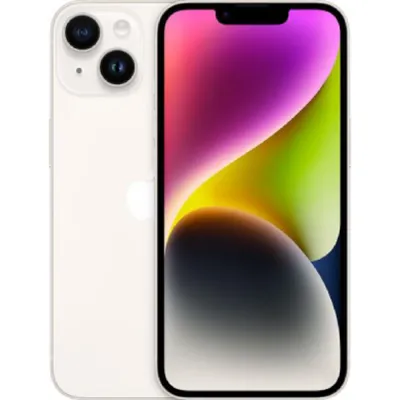
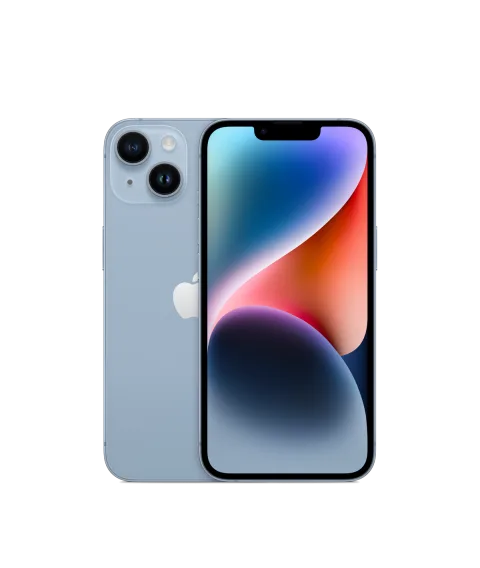
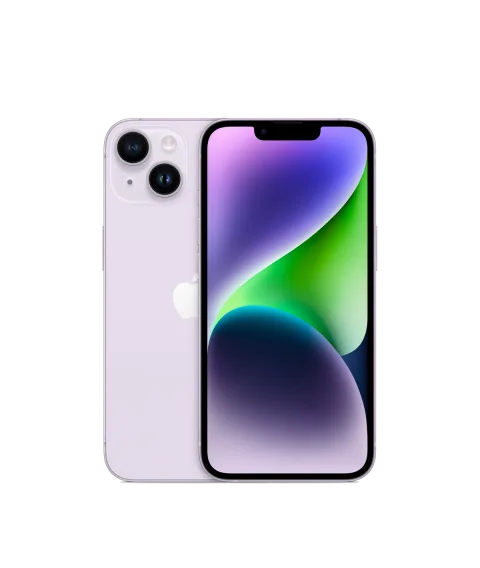
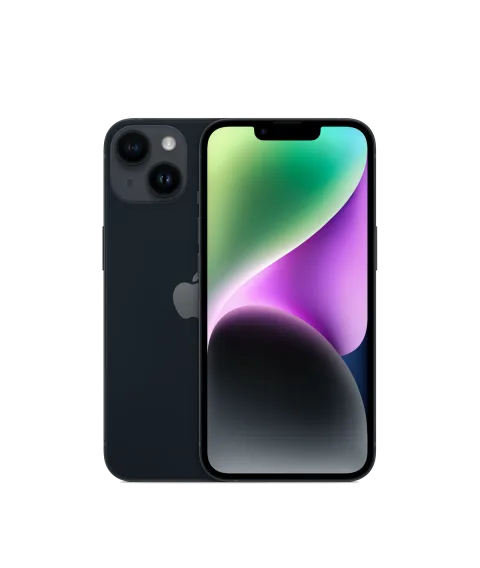
Apple iPhone 14

Apple iPhone 14 SIM Free deals

The Apple iPhone 14 is in our catalog but no UK retailer currently stocks it.

Spec scores £700-£999 Phones · 69 phones
Performance 3.8 /5
Display 3 /5
Rear Camera 2.5 /5
Front Camera 2.8 /5
Battery 3 /5

Deals

Upgrade from £34.96 / month

Color

All

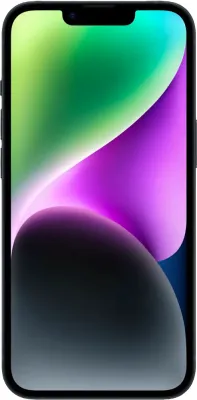
Black

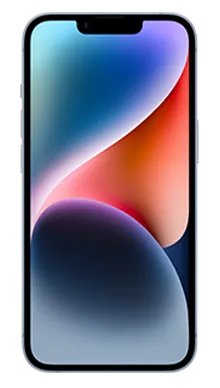
Blue

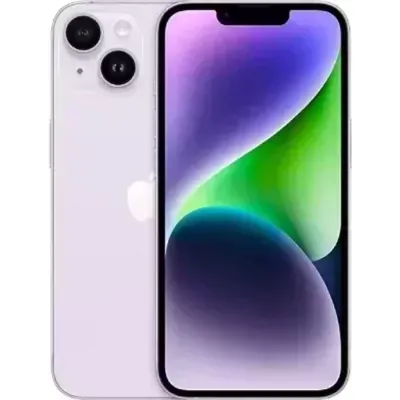
Purple

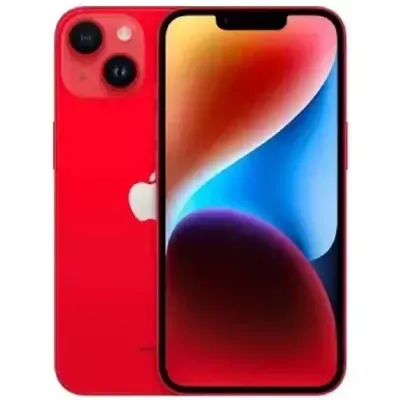
Red

White

Yellow

Storage

All

128GB

512GB

256GB

Budget-focused buyers who want a reliable, fully supported iPhone with a modern OLED display and good camera at the lowest possible contract price.

Apple iPhone 14 SIM Free

Filters

No deals found

Try adjusting your filters to see more results.

About the Apple iPhone 14

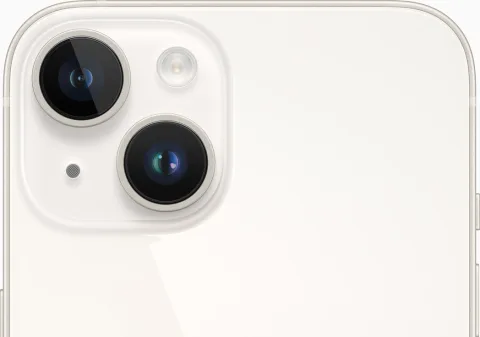
The Apple iPhone 14 occupies an interesting position in 2026 as one of the most affordable ways to get a modern, fully supported iPhone on contract. While criticised at launch for reusing the A15 Bionic chip from the iPhone 13 Pro, that same chip continues to deliver smooth, reliable performance for everyday tasks, from messaging and social media to streaming and casual gaming. The 12MP dual camera system benefits from Apple's Photonic Engine for improved low-light photography and Action mode for stabilised handheld video. Crash Detection and Emergency SOS via satellite added safety features that remain relevant. The 6.1-inch Super Retina XDR OLED display looks excellent for content consumption, and battery life provides a comfortable full day of use. The honest limitations in 2026 are the 60Hz refresh rate, the notch instead of Dynamic Island, Lightning instead of USB-C, and no Apple Intelligence support. These are real trade-offs, but they come with a significant price advantage. With iOS updates expected through at least 2028 or 2029, the iPhone 14 has several years of support ahead. For buyers who prioritise reliability and the lowest possible monthly cost, it delivers a dependable experience without unnecessary expense.

iPhone 14 vs iPhone 14 Plus — Key Differences

Feature Apple iPhone 14 Apple iPhone 14 Plus
Display 6.1-inch Super Retina XDR OLED, 60Hz, 800 nits typical 6.7-inch Super Retina XDR OLED, 60Hz, 800 nits typical
Chipset A15 Bionic, 5-core GPU A15 Bionic, 5-core GPU
Camera system 12MP wide + 12MP ultrawide 12MP wide + 12MP ultrawide
Battery 3,279 mAh — up to 20 hours video playback 4,325 mAh — up to 26 hours video playback
Weight 172 g 203 g
Video playback gain Compact and pocketable one-hand form factor 6 extra hours of video playback over the standard model
SIM-free price Not available From £30.00

Frequently Asked Questions

Is the Apple iPhone 14 still worth buying in 2026?
The Apple iPhone 14 can be worth buying in 2026 if your priorities are affordability and reliability. It still runs iOS smoothly, takes good photos, and has years of software support remaining. However, it lacks USB-C, a 120Hz display, Dynamic Island, and Apple Intelligence. If you can stretch your budget slightly, the iPhone 15 offers meaningful upgrades for a similar price bracket.
How long will the Apple iPhone 14 receive iOS updates?
Apple typically supports iPhones for six to seven years with major iOS updates. The iPhone 14, launched in September 2022, should continue receiving updates through at least 2028 or 2029. It currently runs the latest version of iOS and will continue receiving security patches and feature updates for several more years.
Does the Apple iPhone 14 support Apple Intelligence?
No. Apple Intelligence requires an A17 Pro chip or newer and 8GB of RAM. The iPhone 14 has an A15 Bionic chip with 6GB of RAM, so AI-powered features such as advanced Siri, writing tools, notification summaries, and generative image capabilities are not available on this model.
How good is the Apple iPhone 14 camera?
The Apple iPhone 14 features a 12MP dual camera system with a main sensor and ultrawide lens. Apple's Photonic Engine improves low-light performance significantly, and Action mode provides excellent video stabilisation. While it lacks the 48MP sensor found in the Pro models and iPhone 15, it still captures natural-looking photos that are more than adequate for social media and everyday photography.
What is the difference between the Apple iPhone 14 and iPhone 15?
The iPhone 15 upgrades to a 48MP main camera, adds Dynamic Island replacing the notch, switches from Lightning to USB-C, and uses the faster A16 Bionic chip. The iPhone 15 also has improved display brightness up to 2,000 nits outdoors. The iPhone 14 is cheaper on contract but gives up these meaningful improvements.
Does the Apple iPhone 14 have Crash Detection?
Yes. The Apple iPhone 14 was the first iPhone generation to include Crash Detection, which uses a dual-core accelerometer and high-g force sensors to detect severe car crashes and automatically contact emergency services. It also features Emergency SOS via satellite for contacting help in areas without mobile coverage.
Is the Apple iPhone 14 Plus worth it over the Apple iPhone 14?
The iPhone 14 Plus's biggest advantage is its 6.7-inch display and significantly larger 4,323mAh battery delivering up to 26 hours of video playback, compared to the iPhone 14's 6.1-inch screen and 3,279mAh cell. Both share the same A15 Bionic chip, 12MP cameras, and 60Hz refresh rate. The iPhone 14 Plus starts at £299.99 SIM-free vs £284.99 for the iPhone 14, so the premium is modest for a much bigger screen and better battery life. Compare Apple iPhone 14 Plus deals.
Is the Apple iPhone 14 Pro worth it over the Apple iPhone 14?
The iPhone 14 Pro's 48MP main camera is the biggest upgrade, delivering far more detail than the iPhone 14's 12MP sensor. You also get a 120Hz ProMotion display, Dynamic Island, Always-On display, 3x telephoto zoom, and the faster A16 Bionic chip. The iPhone 14 Pro starts at £364.99 SIM-free vs £284.99 for the iPhone 14. If camera quality and a smoother display matter to you, the Pro is a significant step up. Compare Apple iPhone 14 Pro deals.

Apple iPhone 14 Specifications

Spec Scores

£700-£999 Phones · 69 phones

  • Apple A15 Bionic
  • Hexa-core (2x3.23 GHz Avalanche + 4x1.82 GHz Blizzard)
This phone
75%
Avg
77%
Best
100%
This phone
75%
Avg
44%
Best
100%

Based on calibrated CPU benchmark rankings (60%) and GFXBench GPU scores (40%). Apple chipsets included via editorial calibration since AnTuTu under-represents Apple's architecture.

  • 6.1 inches
  • 1170 x 2532 pixels
  • OLED, 1200 nits peak
This phone
60%
Avg
78%
Best
100%
This phone
60%
Avg
60%
Best
100%

Based on panel type (LTPO is the modern flagship gold standard), resolution, refresh rate, peak brightness, screen size, and HDR10+ / Dolby Vision support. Marketing peak-brightness claims are capped at 3500 nits to prevent inflation.

  • Single camera setup
  • 12 MP main camera
  • 4K video recording
This phone
50%
Avg
57%
Best
86%
This phone
50%
Avg
39%
Best
90%

Based on main-sensor size (1-inch / 1/1.3" beats 1/2.0"), telephoto reach (periscope > 5x > 3x optical), image processing tier (Apple Pro, Pixel Pro, Galaxy Ultra, Honor Magic Pro, Xiaomi Ultra), pro video features (ProRes, Apple Log, Dolby Vision), camera-partnership branding (Leica, Hasselblad, Zeiss) and OIS. Older flagships are de-rated since image processing pipelines have advanced significantly each generation. Megapixel count is deliberately downweighted — it correlates poorly with real-world camera quality.

  • 12 MP front camera
  • 4K selfie video
This phone
55%
Avg
62%
Best
92%
This phone
55%
Avg
54%
Best
92%

Based on selfie megapixels and max selfie-video resolution.

  • 3,279 mAh
  • Wired, PD2.0, 50% in 30 min
This phone
59%
Avg
60%
Best
100%
This phone
59%
Avg
52%
Best
100%

Based on battery capacity (mAh) adjusted for platform efficiency calibrated against NotebookCheck, Tom's Guide, GSMArena and CNET reviewer tests. Apple A-series gets +45% (iOS process freezing + LTPO 1Hz + tuned panels make iPhone Pro Max outlast many 6500+ mAh Android phones in measured tests). Top Snapdragon / Dimensity flagships get +15%, budget chipsets are penalised −15% to −25% to reflect less efficient displays and looser background limits. Charging speed is excluded — see the separate Fast charging tag for that.

General

Dimensions

146.7 x 71.5 x 7.8

Weight

172 g

SIM

Nano-SIM + eSIM + eSIM (max 2 at a time; International)

Operating System

iOS 16, up to iOS 26.4.2

Radio

No

Body

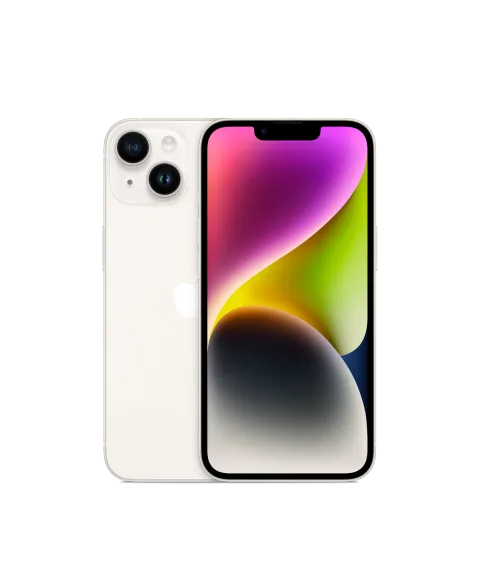
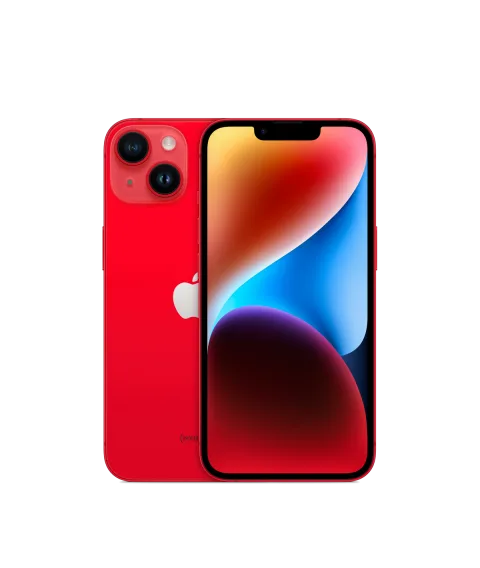
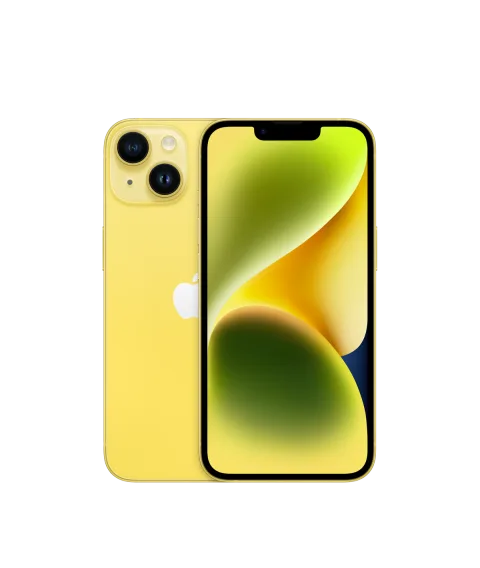
Midnight, Purple, Starlight, Blue, Red, Yellow

Camera

Primary Camera Megapixels

12

Primary Camera Video

4K@24/25/30/60fs, 1080@25/30/60/120/240fs, HDR, Dolby Vision HDR (u to 60fs), stereo sound rec.

Second Camera

12 , f/1.5, 26mm (wide), 1/1.7", 1.9µm, dual pixel PDAF, sensor-shift OIS 12 , f/2.4, 13mm, 120˚ (ultrawide)

Selfie Camera Features

HDR

Primary Selfie Camera

12 , f/1.9, 23mm (wide), 1/3.6", 1.0µm, PDAF SL 3D, (depth/biometrics sensor)

Video Resolution

2160

Selfie Video Resolution

4K@24/25/30/60fs, 1080@25/30/60/120fs, gyro-EIS

Display

Type

Super Retina XDR OLED, HDR10, Dolby Vision, 800 nits (HBM), 1200 nits (peak)

Display Size

6.1

Display Resolution

1170 x 2532 pixels, 19.5:9 ratio (~460 ppi density)

Display Protection

Ceramic Shield glass

CPU & Memory

Chipset

Apple A15 Bionic

GPU

Apple GPU (5-core graphics)

CPU

Hexa-core (2x3.23 GHz Avalanche + 4x1.82 GHz Blizzard)

Memory Card Slot

No

Internal Storage

Sound

Loudspeaker

Yes, with stereo speakers

3.5mm Jack

No

Connectivity & Data

2G

GSM 850 / 900 / 1800 / 1900

3G

HSDPA 850 / 900 / 1700(AWS) / 1900 / 2100

4G

1, 2, 3, 4, 5, 7, 8, 12, 13, 17, 18, 19, 20, 25, 26, 28, 30, 32, 34, 38, 39, 40, 41, 42, 46, 48, 66 - A2882, A2884

5G

1, 2, 3, 5, 7, 8, 12, 20, 25, 26, 28, 30, 38, 40, 41, 48, 66, 70, 77, 78, 79 SA/NSA/Sub6 - A2882, A2884

Network Speed

HSPA, LTE, 5G, EV-DO Rev.A 3.1 Mbps

Network Technology

GSM / CDMA / HSPA / EVDO / LTE / 5G

Wi-Fi

Wi-Fi 802.11 a/b/g/n/ac/6, dual-band, hotspot

Bluetooth

5.3, A2DP, LE

USB

Lightning, USB 2.0

NFC

Yes

GPS

GPS, GLONASS, GALILEO, BDS, QZSS

Battery

Battery

3279

Charging

Wired, PD2.0, 50% in 30 min 15W wireless (MagSafe) 15W wireless (Qi2) - requires iOS 17.2 update

Other

Sensors

Face ID, accelerometer, gyro, proximity, compass, barometer